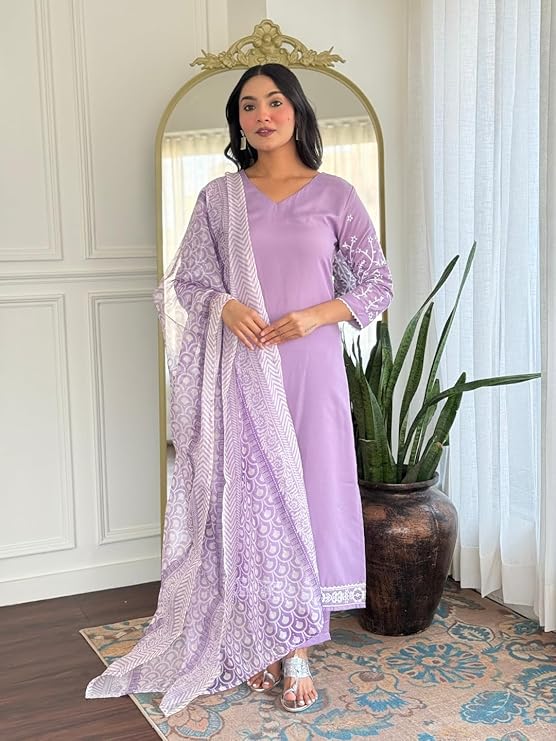
- Kurta Fabric:- Rayon || Bottom Fabric:- Rayon || Dupatta Fabric:- Taby
Lilac Embroidered Straight Kurta with Pant and Dupatta Set
₹2,500.00 Original price was: ₹2,500.00.₹1,399.00Current price is: ₹1,399.00.
Categories: Daily wear, office wear, shop by occassion
Description
About this item punjabi dress design
- Kurta Fabric:- Rayon || Bottom Fabric:- Rayon || Dupatta Fabric:- Taby
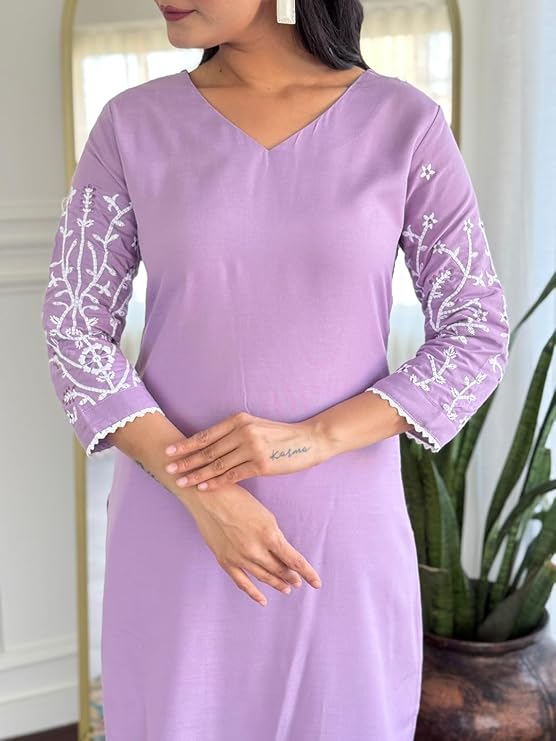
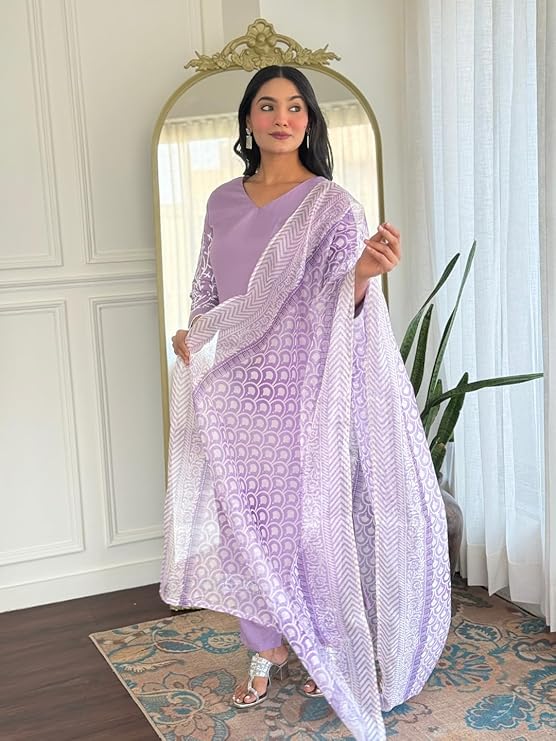
- Kurta Work:- Embroidered || Dupatta Work:- Printed
- Package Contains:- 1 Set : KURTA, PANT AND DUPATTA
- For the best fit, please refer to our size guide. If you’re between sizes or unsure, we recommend choosing the next larger size.
- Care Instructions: Hand Wash Only punjabi dress design
-
The world of ethnic fashion is a vibrant tapestry, and at its very heart lies the illustrious Punjabi dress design. This particular attire, often referred to as a Punjabi suit or salwar kameez, is more than just clothing; it is a profound expression of culture, heritage, and effortless grace. When one thinks of a traditional Punjabi dress design,
images of vivid colors, intricate embroidery, and flowing silhouettes immediately come to mind. It is a garment that celebrates femininity in its most elegant form. The item in question—a complete set comprising a Kurta, Pant, and Dupatta crafted from Rayon and Taby fabrics—epitomizes the modern evolution of this timeless Punjabi dress design.
This comprehensive guide will delve into every facet of this ensemble, exploring its components, the philosophy behind its creation, and how to wear it with the confidence of a modern-day queen.
The very foundation of a captivating Punjabi dress design lies in its material. The choice of fabric dictates the drape, the comfort, the fall, and ultimately, the overall aesthetic of the outfit. This specific set utilizes Rayon for both the Kurta and the Bottom (Pant), a decision that speaks volumes about the designer’s intent to merge traditional appeal
with contemporary comfort. Rayon, a semi-synthetic fiber derived from natural sources like wood pulp, is renowned for its silk-like qualities. It offers a gorgeous sheen, a luxuriously soft feel against the skin, and a magnificent drape that flows with the body’s movement. This makes it an impeccable choice for a Punjabi dress design, which
inherently values fluidity and grace. The dupatta, that essential element of poise, is crafted from “Taby” fabric. Taby is likely a variation or a specific type of weave, potentially a misspelling or trade name for Tabby weave, which is the most basic weave creating a simple, plain, and durable fabric. When used for a dupatta, it often refers to a lightweight
, often slightly crisp fabric that holds prints beautifully and allows for easy styling. This combination of Rayon and Taby creates a harmonious balance in the Punjabi dress design—the outfit has body and movement, while the dupatta provides structure and a canvas for artistry.
The artistic soul of this Punjabi dress design is revealed in its workmanship. The kurta is described as “Embroidered,” which opens up a universe of possibilities. Embroidery is the cornerstone of traditional Indian garment decoration, and in a Punjabi dress design, it is particularly significant. The embroidery on this kurta could range from
delicate and sparse phulkari-inspired motifs (which literally translates to ‘flower work’) to more dense and intricate patterns like zardozi (metallic thread embroidery), gota patti (appliqué with gold or silver ribbon), or nakshi (detailed and artistic embroidery). This embellishment might adorn the neckline, the cuffs, the hemline, or even
run along the front panel (placket) of the kurta. It tells a story, each stitch a testament to the artisan’s skill, transforming a simple garment into a masterpiece. This meticulous handwork is what elevates a standard Punjabi dress design into a wearable piece of art.
Conversely, the dupatta boasts a “Printed” design. This contrast between embroidered kurta and printed dupatta is a very clever and modern approach to a Punjabi dress design. It prevents the outfit from becoming overly heavy or opulent, making it suitable for a wider range of occasions. The print could be anything from classic floral and botanical
motifs to contemporary geometric patterns, abstract art, or even digital prints depicting scenes or intricate jaal work (net patterns). The print on the dupatta likely complements the color palette and the embroidery colors on the kurta, creating a cohesive visual narrative. This thoughtful distribution of design elements—heavy work on the kurta and lighter, printed work on the dupatta—is a hallmark of a well-balanced and wearable Punjabi dress design.
A complete package is always a mark of value and convenience. This set includes the holy trinity of the Punjabi dress design: the Kurta, the Pant, and the Dupatta. This means the consumer receives a head-to-toe, coordinated look without the hassle of mixing and matching separate components. The kurta is the tunic, the centerpiece of the outfit.
Its length, cut, and style define the overall silhouette of the Punjabi dress design. The pant, also known as salwar or shalwar, is the bottom wear. In modern sets, this often refers to a straight-cut pant or a slightly tapered leg, which is versatile and flattering on most body types. The dupatta is the long scarf or stole, an indispensable accessory that
completes the Punjabi dress design. It is not merely a piece of cloth; it is a symbol of modesty and grace, and when styled correctly, it becomes the ultimate statement piece that ties the entire ensemble together.
Perhaps the most crucial advice offered with this Punjabi dress design is regarding sizing: “For the best fit, please refer to our size guide. If you’re between sizes or unsure, we recommend choosing the next larger size.”
This is not a mere suggestion; it is a golden rule in ethnic wear. A Punjabi dress design is meant to be comfortable and flattering, not tight or restrictive. A larger size can always be tailored to fit perfectly, but a smaller size offers little room for adjustment. This advice acknowledges the importance of ease and movement in a Punjabi dress design
, ensuring the wearer feels as beautiful as she looks.
Finally, the care instructions—”Hand Wash Only”—are a gentle reminder of the delicate nature of this beautiful attire. The embroidery and the printed dupatta require careful handling to maintain their vibrancy and integrity
. Machine washing could snag the embroidery threads, fade the prints, and ruin the delicate drape of the Rayon fabric. Hand washing preserves the life and beauty of this Punjabi dress design, allowing it to be a cherished part of one’s wardrobe for years to come.
Deconstructing the Modern Punjabi Dress Design: A Cultural and Style Analysis
To truly appreciate this ensemble, one must understand the evolution of the Punjabi dress design. Historically, the Punjabi suit was a practical and modest outfit for the women of Punjab, a region straddling India and Pakistan
. It consisted of a long, straight kurta (kameez), loose-fitting salwar, and a dupatta. Over decades, this simple Punjabi dress design has been adopted and adapted by the entire Indian subcontinent and the global diaspora, evolving into a fashion statement without losing its cultural roots.
The modern Punjabi dress design, like the one described, is a fusion of tradition and global trends. Designers experiment with cuts, lengths, fabrics, and embellishments. The use of Rayon is a perfect example. While traditional
fabrics like cotton and silk are still beloved, Rayon offers an affordable, versatile, and incredibly comfortable alternative that mimics the luxury of silk. This makes the Punjabi dress design more accessible and suitable for all-day wear at events like weddings, festivals, parties, or even sophisticated casual gatherings.
The beauty of a Punjabi dress design is its incredible versatility. It can be styled to suit the wearer’s personality and the demands of the occasion.
-
For a Traditional Look: Pair this set with traditional juttis (embroidered flats), statement Kundan or Polki jewelry, a classic bindi, and a well-draped dupatta over the head or shoulders. This style honors the authentic spirit of the Punjabi dress design.
-
For a Contemporary Twist: Style the kurta with jeggings or even skinny jeans instead of the provided pant for a fusion look. Drape the dupatta in a modern way, perhaps like a long scarf.
-
Pair it with high heels or even boots, and opt for minimalist jewelry. This showcases the adaptability of the Punjabi dress design.
-
For Formal Events: The described set, with its embroidered kurta, is already poised for a festive event. Elevate it with high-heeled sandals, a chic clutch, statement earrings, and a neatly pleated dupatta pinned
-
at the shoulder. This exemplifies how a well-executed Punjabi dress design can hold its own against any western gown.
The color palette of this specific Punjabi dress design is not mentioned, but it is a critical element. Punjabi outfits are known for their bold and joyful colors—fiery reds, sunny yellows, royal blues, emerald greens, and vibrant pinks
. However, contemporary designs also embrace pastels, neutrals, and darker, sophisticated hues. The chosen color would work in tandem with the embroidery and print to define the outfit’s character.
In conclusion, this particular item is a quintessential example of the modern Punjabi dress design. It successfully balances traditional craftsmanship (embroidery) with modern practicality (Rayon fabric, printed dupatta).
It offers a complete, coordinated solution for the consumer while providing essential guidance on fit and care. It is a garment that respects its cultural origins while confidently embracing the present, making it a perfect choice for anyone looking to experience the timeless elegance and joyful spirit of a true Punjabi dress design. Every element, from the fabric
choice to the design details, works in harmony to create an outfit that is not just worn, but experienced. It is a celebration of culture, a testament to artisan skill, and a canvas for personal style, all contained within the beautiful framework of a classic Punjabi dress design.
The journey of acquiring and wearing a Punjabi dress design is an experience in itself, one that begins with the anticipation of unboxing and culminates in the confidence of wearing it.
When this specific set arrives, the first touch of the Rayon fabric will immediately signal its quality. The soft, fluid texture of the kurta and pant promises comfort, while the Taby dupatta will have a
distinct handle, likely slightly crisp yet lightweight, perfect for holding its printed patterns sharply. This tactile experience is a fundamental, yet often overlooked, part of the allure of a well-made Punjabi dress design.
Upon first wear, the wearer will appreciate the wisdom behind the sizing recommendation. A Punjabi dress design is meant to allow for ease of movement—whether you are dancing at a wedding, sitting cross-legged for a long ceremony, or simply enjoying a festive meal. The Rayon fabric, known for its breathability, will ensure comfort
throughout the day or evening, preventing the outfit from feeling heavy or restrictive. This practical comfort is a core principle of the traditional Punjabi dress design, which was originally designed for the agrarian
lifestyle of the Punjab region, requiring freedom of movement and resilience. The modern interpretation, as seen in this set, retains that foundational comfort while elevating the aesthetic to suit contemporary events.
The styling of the dupatta is where personal creativity truly shines within the framework of a Punjabi dress design. This versatile piece can transform the entire look based on how it is draped. The classic style is to drape it over both shoulders, allowing it to flow down the back. For a more secure and active option, one end can be pinned at the shoulder
with a beautiful brooch, letting the rest fall elegantly. For a modern, chic look, the dupatta can be folded into a long, thin strip and draped around the neck like a long, elegant scarf. Another popular style is the “seedha pallu” or straight drape,
where the dupatta is taken over one shoulder and the other end is brought across the front to be tossed over the same shoulder or the opposite one. Each drape style offers a different silhouette and feel, making the same Punjabi dress design adaptable for multiple appearances.
Accessorizing is the final layer that personalizes any Punjabi dress design. The choice of this set, with its embroidered kurta, provides a fantastic base. If the embroidery is multicolored, it offers opportunities
to pick out specific hues with statement jewelry. For instance, if the threadwork has accents of fuchsia, emerald, and gold, one could choose large
jhumkas (dangling earrings) in gold with green and pink stones. Alternatively, if the Punjabi dress design is in a monochromatic scheme, say a cream kurta with gold embroidery, the accessories can either match the gold theme with polki diamonds and a maang tikka (headpiece) or provide a stunning contrast with kundan work in rubies or emeralds.
Footwear ranges from traditional mojaris or juttis to embellished sandals or even high heels, depending on the formality of the event and the wearer’s height preferences. A clutch or a potli bag completes the look, adding a final touch of elegance to the overall Punjabi dress design.
The occasion for which this Punjabi dress design is chosen also dictates its presentation. For a daytime event like a mehndi (henna ceremony) or a luncheon, the look can be kept lighter and brighter. The dupatta might
be styled more casually, and jewelry could be kept to a minimum—perhaps just earrings and bangles. For a grand evening wedding reception, the same set can be amplified with heavier jewelry, a more formal dupatta drape,
sophisticated makeup, and an elaborate hairstyle. This chameleon-like ability to scale up or down is a signature strength of a versatile Punjabi dress design. It is not a one-outfit, one-event garment; it is a valuable investment for a woman’s ethnic wardrobe.
Beyond the individual wearer, this Punjabi dress design also speaks to a larger cultural narrative. In today’s globalized world, ethnic wear is a powerful connector to one’s roots. For the diaspora, wearing a beautiful
Punjabi dress design at a family function or a cultural festival is a way to celebrate and preserve their heritage. It becomes a conversation starter, a piece of cultural identity, and a source of pride. The intricate embroidery echoes the craftsmanship passed down through generations, while the modern cut and fabric make it relevant and relatable to the youth.
This blend is crucial for the continued evolution and survival of traditional attire. A Punjabi dress design is no longer confined to geographical boundaries; it is a global fashion statement, celebrated on international runways and red carpets, yet it remains deeply personal and culturally significant.
The care instruction, “Hand Wash Only,” while simple, is a commitment to preserving this piece of art. Caring for a Punjabi dress design properly ensures its longevity. Hand washing in cold water with a mild detergent will protect
the integrity of the embroidery threads, preventing them from loosening or snagging. It will also preserve the vibrancy of the prints on the dupatta and the color of the Rayon fabric itself. Air drying in the shade is preferable to machine drying, which can shrink the fabric and damage the delicate work. Proper storage, ideally folded with tissue paper in a dry cupboard,
will prevent unnecessary creasing and protect the outfit from moisture and insects. This mindful approach to garment care honors the work that went into creating the Punjabi dress design and allows it to be passed down or worn for many seasons to come.
In essence, this particular Rayon Punjabi dress design is more than the sum of its parts. It is a carefully curated experience that blends aesthetics, culture, comfort, and practicality. It represents how traditional attire can successfully
adapt to modern demands without losing its soul. From the thoughtful fabric selection to the distribution of embroidery and print, every decision is intentional, aimed at delivering a product that is beautiful, wearable, and enduring.
It empowers the wearer to express her cultural identity and personal style with confidence and grace. Whether you are a connoisseur of ethnic fashion or new to the world of Punjabi dress design, this set offers a perfect entry point into a rich and colorful sartorial tradition, proving that some styles are truly timeless.
-
Be the first to review “Lilac Embroidered Straight Kurta with Pant and Dupatta Set” Cancel reply
Related products
-
Sale!


Women’s Printed Alia-Cut Anarkali Kurta Pant Set with Dupatta
₹3,000.00Original price was: ₹3,000.00.₹699.00Current price is: ₹699.00. -
Sale!


V-Neck 3-Piece Kurta Set with Ankle-Length Pants & Full-Length Dupatta
₹4,999.00Original price was: ₹4,999.00.₹999.00Current price is: ₹999.00. -
Sale!


Floral Printed Boho Look Flared Sleeve Kurta With Trouser & Dupatta
₹3,000.00Original price was: ₹3,000.00.₹1,319.00Current price is: ₹1,319.00. -
Sale!


Women’s Cotton Self Design Straight Kurta Pant with Dupatta Set
₹5,000.00Original price was: ₹5,000.00.₹1,329.00Current price is: ₹1,329.00.
Reviews
There are no reviews yet.