
Manufacturer
Sivas Creation
Packer
Customer Service: Available On Package
Item Weight
450 g
Item Dimensions LxWxH
25 x 25 x 7 Centimeters
Included Components
Kurta
Generic Name
Kurta Set With Dupatta
₹3,000.00 Original price was: ₹3,000.00.₹899.00Current price is: ₹899.00.
In the vast and vibrant tapestry of global fashion, few sartorial traditions possess the depth, diversity, and enduring appeal of traditional Indian women’s clothing. It is a realm where fabric becomes a canvas for storytelling, where color embodies emotion, and where silhouette reflects a rich cultural history
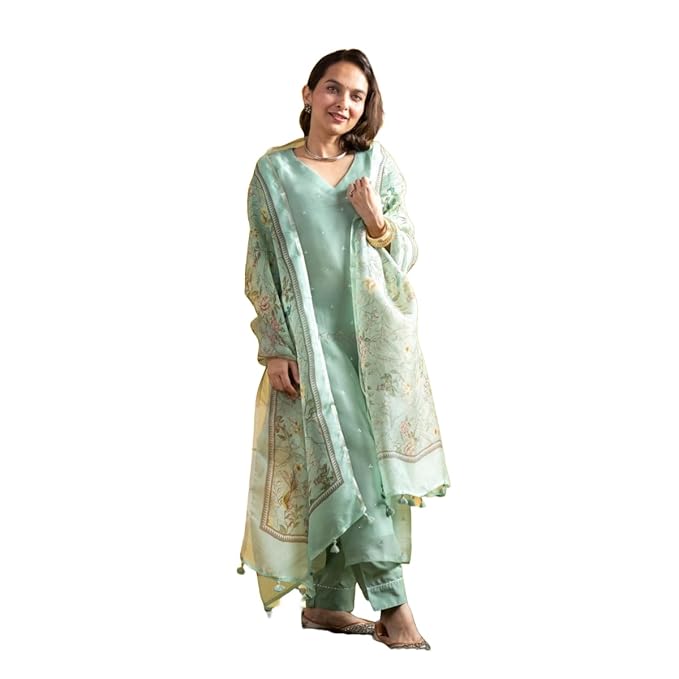
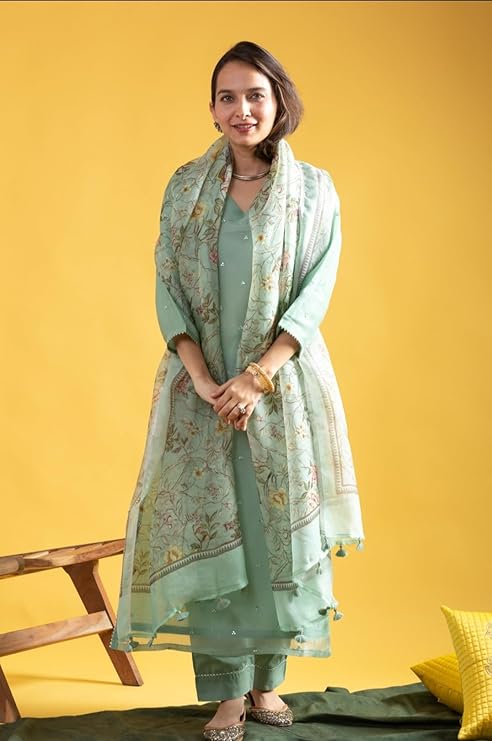
. Within this magnificent spectrum, the three-piece ethnic set—comprising a kurta, bottoms, and a dupatta—stands as a quintessential and beloved archetype. The described ensemble, a breathtaking pista green affair, is not merely an outfit; it is a
curated experience, a harmonious symphony of design, fabric, and artistry that perfectly encapsulates the evolution of traditional Indian women’s clothing for the contemporary wearer. This exploration will delve into every facet of this collection, positioning
it as a pinnacle of modern elegance rooted in timeless tradition, a true testament to the enduring legacy of traditional Indian women’s clothing.
To fully appreciate this pista green set, one must first understand its foundational element: the three-piece suit itself. This format is the bedrock of a significant portion of traditional Indian women’s clothing, particularly in North India, where it is known as
the salwar kameez or suit. Its historical roots are deep, offering a practical, modest, and incredibly versatile option for women across generations. What makes this specific ensemble so special is how it takes this classic formula and elevates it through a
masterful selection of color, material, and detailing. It represents the ongoing dialogue between heritage and modernity that defines the current landscape of traditional Indian women’s clothing. It answers the call of the modern woman who seeks garments
that are authentically rooted in her culture yet resonate with a global, sophisticated sensibility. This balance is the holy grail for designers working within the realm of traditional Indian women’s clothing.
The journey into this ensemble begins with its captivating color. Pista green is a stroke of genius, a color choice that speaks volumes about the refined aesthetic at play. In the chromatic language of traditional Indian women’s clothing, green holds a place of
profound significance. It is the color of nature, symbolizing new beginnings, harmony, fertility, and prosperity. It is often associated
with festivities and celebrations, making it a spiritually and culturally resonant choice. Pista green, with its soft, muted, and sophisticated tone, is a modern interpretation of this symbolic hue. Unlike louder emeralds or limes, pista green exudes an
understated confidence. It is calming, fresh, and universally flattering, providing a serene canvas that allows the intricate craftsmanship to take center stage. This thoughtful selection of color demonstrates how traditional Indian women’s clothing is
continuously refined, using palette to communicate a specific, modern kind of elegance while staying true to its symbolic roots.
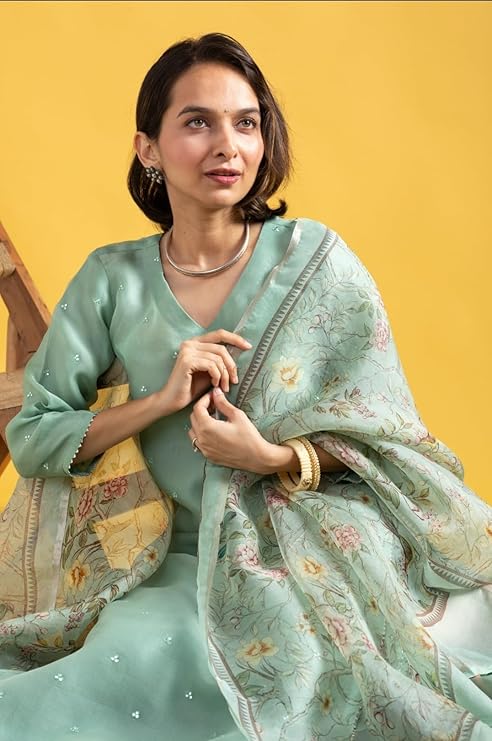
The centerpiece of this set, and indeed of most traditional Indian women’s clothing sets, is the kurta. The kurta’s design is a
masterclass in balanced aesthetics. The V-neck is a particularly insightful feature. While classic kurtas often feature round, keyhole, or mandarin necklines, the V-neck has been wholeheartedly embraced in contemporary interpretations of traditional Indian
women’s clothing. It is a universally flattering cut that elongates the neckline, provides a graceful frame for the face, and adds a touch of modern sophistication without compromising modesty. It acts as a perfect anchor for the “delicate embroidery” mentioned,
often focusing intricate work on the yoke (the part of the garment covering the shoulders and chest) to draw the eye upwards. This makes the V-neck a key stylistic element in the evolution of traditional Indian women’s clothing.
Further enhancing the kurta’s elegance are the three-quarter sleeves. This sleeve length is a pinnacle of practical elegance in traditional Indian women’s clothing. It offers more coverage than cap sleeves, providing a degree of modesty and sun
protection, while allowing more freedom of movement and a glimpse of the wrist than full-length sleeves. This makes it ideal for the long, active hours of a festive day, whether one is partaking in rituals, enjoying a meal, or engaging in heartfelt conversation. The
cuff of the sleeve often serves as another canvas for the embroiderer’s art, featuring a continuation of the delicate motifs found elsewhere, a detail that signifies a high-quality piece of traditional Indian women’s clothing.
The silhouette of the kurta is described as a “comfortable straight cut.” This is a significant and highly popular choice in modern traditional Indian women’s clothing. The straight cut is democratic and forgiving; it skims the body’s contours
without clinging to them, creating a sleek, vertical line that is inherently slimming and graceful. This silhouette champions comfort and ease, core values in the daily wearing of traditional Indian women’s clothing, while its clean, minimalist lines project a
contemporary, almost architectural, sensibility. It is a move away from more voluminous or fitted styles, offering a look that is both modest and decidedly chic. The elegance of this straight-cut kurta lies in its sophisticated simplicity, proving that within the domain
of traditional Indian women’s clothing, powerful statements are often made through refined understatement.
However, this simplicity in form is meticulously counterbalanced by the “delicate embroidery work detailing” and “subtle embellishments.” This is where the soul of the garment resides. Embroidery is the heartbeat of traditional Indian women’s
clothing, a craft passed down through generations of skilled artisans. This meticulous handwork is the primary differentiator between mass-produced garments and heirloom-quality pieces. The description suggests embroidery that is intricate yet not
overwhelming—perhaps featuring fine mukaish (metallic thread work), subtle zardozi (metallic embroidery), or delicate thread work creating floral or geometric motifs. The placement of this embroidery is strategic: elegantly tracing the V-neck, running along
the cuffs of the three-quarter sleeves, and perhaps adorning the hem or a vertical panel down the front. This ensures the embellishment enhances the garment’s structure and complements the wearer’s form, a hallmark of thoughtfully
designed traditional Indian women’s clothing.
The conversation about this ensemble would be incomplete without a dedicated ode to its crowning glory: the organza dupatta. In the hierarchy of traditional Indian women’s clothing, the dupatta is far more than an accessory; it is a symbol of grace, a
statement piece, and an integral component that completes the spiritual and sartorial whole. Historically, it served as a veil or a symbol of modesty, but in contemporary fashion, its role has evolved into a primarily aesthetic one, while still retaining its cultural
significance. The choice of organza for this dupatta is a deliberate and exquisite one, setting this ensemble apart within the world of traditional Indian women’s clothing. Organza, a thin, plain weave, sheer fabric crafted from silk or synthetic fibers, is
renowned for its crispness, slight stiffness, and beautiful translucency. This texture allows it to hold dramatic drapes and flow with an ethereal lightness that is the epitome of grace in traditional Indian women’s clothing.
The description of the dupatta is particularly rich: “adorned with intricate floral prints and decorative borders, complemented with
charming tassel details.” This transforms it from a simple length of fabric into a standalone work of art. The intricate floral prints likely echo the motifs embroidered on the kurta, creating a harmonious visual dialogue between the two pieces. The decorative
borders frame the dupatta, giving it definition, weight, and a finished, luxurious look. But the true pièce de résistance is the “charming tassel details.” Tassels, or latkans, are a traditional finishing element in many types of traditional Indian women’s
clothing, particularly on dupattas and lehengas. They add a dynamic, playful elegance and a tactile quality to the ensemble. As the wearer moves, the tassels sway, creating a captivating visual rhythm that is both traditional and whimsical. Draping this organza
dupatta—whether styled casually over one shoulder, elegantly pinned at the shoulder, or flowing freely behind like a trail of mist—immediately elevates the entire outfit, showcasing the transformative power of this key element in traditional Indian women’s clothing.
Completing the trio is the bottom wear, described as “matching straight-cut trousers.” The choice of trousers, as opposed to the more traditional salwar (loose, pleated pants tapering at the ankle) or churidar (tightly fitted pants that bunch at the ankle), is a
clear nod to contemporary global fashion trends influencing modern traditional Indian women’s clothing. Straight-cut trousers offer a sleek, streamlined silhouette that is incredibly flattering and effortlessly chic. They provide the comfort and ease of
a salwar but with a more structured, tailored appearance that aligns with Western suiting sensibilities. This fusion of Eastern and Western silhouettes is a key driver in the international appeal and everyday wearability of traditional Indian women’s
clothing. The matching pista green color creates a serene, monochromatic base from the waist down, ensuring that the eye is drawn upward to the detailed kurta and the spectacular dupatta. This cohesive color story is a fundamental principle of well-
designed traditional Indian women’s clothing, guaranteeing a harmonious and polished overall look that is greater than the sum of its parts.
The “premium fabric” cited is the unsung hero of this entire ensemble. The quality of the material is what separates disposable fashion from enduring style, a critical consideration for discerning buyers of traditional Indian women’s clothing. A high-
quality fabric ensures that the kurta drapes beautifully and doesn’t lose its shape, the trousers maintain their crisp line, and the organza dupatta has the right amount of body and crispness. It directly impacts the wearer’s comfort—a paramount concern for
festive traditional Indian women’s clothing which is often worn for many hours, sometimes in warm climates. A premium fabric breathes better, feels softer against the skin, and, crucially, provides a stable foundation for the embroidery and
embellishments, ensuring they are securely anchored without pulling or distorting the base material. This commitment to quality is what builds the reputation and longevity of brands and artisans within the traditional Indian women’s clothing industry,
transforming a beautiful garment into a cherished possession.
When this kurta, these trousers, and this dupatta come together, they create a “complete ensemble” that offers a profound sense of harmony and effortless elegance. This is the ultimate goal of any curated set of traditional Indian women’s clothing—to provide a cohesive, head-to-toe look that requires minimal assembly from the wearer while delivering maximum visual impact. It
eliminates the guesswork of pairing separate elements, making it an ideal choice for a woman who values both profound tradition and modern convenience. The “harmonious traditional look” achieved is one of refined grace, a picture of modern Indian femininity
that is confident, cultured, and captivating. It stands as a perfect example of how traditional Indian women’s clothing can provide a powerful sense of identity and belonging through aesthetics.
Beyond its physical attributes, this ensemble represents the very spirit of celebration inherent in traditional Indian women’s
clothing. It is crafted for moments that matter—festivals like Diwali and Eid, wedding functions, intimate ceremonies, and special gatherings. To wear it is to participate in a collective joy, to adorn oneself in a garment that is recognized and appreciated within a
shared cultural context. The pista green color, symbolizing prosperity and new beginnings, makes it an auspicious choice for such events. The flow of the organza dupatta, the glint of the delicate embroidery under the lights, the comfort of the straight silhouette—
all these elements contribute to an experience that is as emotionally resonant as it is visually stunning. This emotional connection, this weaving of personal memory into the very threads of the fabric, is a unique and priceless aspect of traditional Indian
women’s clothing. This pista green set is not just an item to be worn; it is an heirloom in the making, a piece of traditional Indian women’s clothing that will be remembered in photographs and stories for years to come, a beautiful, enduring symbol of
culture, craft, and personal elegance. It is, in every sense, a masterpiece of traditional Indian women’s clothing.
The acquisition of such a meticulously crafted set is only the beginning. The true life of this piece of traditional Indian women’s clothing begins when it is adorned, styled, and integrated into
the wearer’s world. The act of draping the dupatta, for instance, is an art form in itself within the practice of wearing traditional Indian women’s clothing. There are numerous ways to style it, each conveying a slightly different nuance. The classic one-
shoulder drape, where the dupatta flows down the back and over one arm, offers a timeless, graceful look. For a more secure and structured appearance, it can be pinned at the shoulder with a brooch, perhaps one that echoes the pista green and gold of the
embroidery. The “seedha pallu” or “gujarati” style, where the dupatta is draped across the front of the body, is a more formal and traditional approach often seen at weddings. The choice of drape allows a woman to personalize this element of her traditional
Indian women’s clothing, making the same ensemble feel different with each wearing. The lightweight, crisp nature of the organza fabric is particularly forgiving for these various styles, holding pleats and folds beautifully, a testament to how fabric choice is integral to the functionality of traditional Indian women’s clothing.
The versatility of this specific set is a key aspect of its modern appeal. While it is undeniably a showstopper for festive occasions, its
elegant color palette and sophisticated silhouette allow it to cross into other sartorial territories. This adaptability is a cornerstone of the evolution of traditional Indian women’s clothing. Imagine the pista green kurta paired not with its matching trousers, but
with a simple pair of white churidar or even well-tailored, dark-wash denim for a chic, fusion look. The embroidery elevates it
beyond a simple top, making it suitable for a sophisticated lunch, a day at a cultural mela, or even a creative workplace environment. Conversely, the straight-cut trousers, being a classic and neutral silhouette, could be separated from the set and paired with a plain,
solid-colored kurti for a more casual, everyday iteration of traditional Indian women’s clothing. This “mix and match” potential is a hugely appealing factor for the contemporary consumer, who seeks maximum utility and creative expression from her
wardrobe. It demonstrates how a single, well-curated piece of traditional Indian women’s clothing can become a versatile workhorse, transcending the boundary of a single occasion and proving its value time and again.
Furthermore, the choice of a pre-coordinated set speaks to a particular philosophy in today’s fashion landscape. In a world saturated with fast fashion and overwhelming choice, the harmonious ensemble offers a sartorial solution. It is a complete, pre-vetted look
handed to the wearer, reducing the anxiety of assembly while guaranteeing a polished and culturally coherent outcome. This is particularly significant in the context of traditional Indian women’s clothing, where the combination of color, pattern, and
texture can be complex and intimidating for some. For a younger woman new to wearing such attire, for a member of the diaspora
reconnecting with her heritage, or for any individual seeking the effortless elegance of a coordinated look, this three-piece set is the perfect gateway. It represents a segment of the traditional Indian women’s clothing market that masterfully prioritizes
convenience without compromising even a single iota of aesthetic integrity or cultural authenticity. It is a ready-to-wear solution for traditional attire, making the beauty and elegance of traditional Indian women’s clothing accessible and manageable for a
broad, often time-poor, audience.
The production and craftsmanship behind such an outfit warrant deep consideration, as they connect the wearer to a vast artisanal ecosystem. The “delicate embroidery work detailing” is not merely a marketing phrase; it is the result of hours, sometimes days, of
skilled labor by artisans whose skills have often been passed down through generations. This aspect of traditional Indian women’s clothing is a vital link to the artisanal heart of India. While this particular set may not be a specific, geographically-
tagged craft like chikankari or phulkari, its embroidery is inspired by the vast repository of techniques that define the subcontinent’s textile heritage. When a consumer chooses this piece, they are, in a small but significant way, participating in the
economy that supports these craftspeople. The sustained demand for beautifully embellished traditional Indian women’s clothing ensures that these traditional skills are not relegated to museums but are instead valued, sustained, and allowed to evolve.
This creates a powerful and beautiful cycle where the preservation of intangible cultural heritage is driven by the aesthetics and economics of contemporary fashion, a dynamic and unique aspect of the traditional Indian women’s clothing industry.
Let us also consider the global context and the phenomenon of “ethnic chic.” The silhouette of the kurta and trousers, and indeed the very concept of coordinated separates, has found resonance on international runways and in the wardrobes of global style icons. This has propelled traditional Indian women’s clothing into the forefront of global fashion conversations. The pista green set,
with its clean lines, elegant drape, and sophisticated color story, is perfectly positioned within this movement. It is unmistakably
Indian in its essence and components, yet its overall composition—the V-neck, the straight-cut trousers, the minimalist approach to embellishment—uses a universal design language of modern elegance. This makes it a powerful tool for cultural expression for the
diaspora and for global citizens who appreciate its artistry. It is no longer uncommon to see such ensembles at summer weddings in Europe, at Diwali celebrations in North America, or at high-end corporate events in Southeast Asia, a testament to the global reach,
adaptability, and growing influence of traditional Indian women’s clothing. This set, therefore, acts as a cultural ambassador, representing the refined, contemporary, and wearable face of a rich sartorial heritage to the world.
Finally, the emotional resonance and the concept of the “sartorial heirloom” must be addressed. Traditional Indian women’s
clothing is deeply intertwined with memory, identity, and personal history. A woman might remember her first sophisticated
salwar kameez as a young adult, a symbol of her coming of age. She will certainly remember the outfits worn at significant festivals, weddings, and family gatherings. This pista green ensemble, with its inherent elegance and quality, has the potential to become one
of those memorable, landmark pieces in a wardrobe. Its color is associated with freshness and prosperity, making it an auspicious and joyful choice for celebratory events. The sensory experience of wearing it—the feel of the premium fabric against the skin, the
gentle weight and flow of the organza dupatta, the subtle texture of the embroidery—are sensations that anchor the outfit in personal history. Unlike many Western fast-fashion garments, pieces of high-quality traditional Indian women’s clothing are
often kept for years, sometimes even passed down or re-styled, because their traditional core and quality construction make them less susceptible to the whims of transient trends. This emotional and mnemonic dimension adds an intangible, profound value to
the garment, elevating it from a mere commodity to a cherished part of a woman’s personal and cultural narrative. This pista green set is not just an outfit; it is a potential future memory, a beautiful, enduring symbol of culture, craft, and personal elegance,
solidifying its status as a masterpiece of traditional Indian women’s clothing.




Reviews
There are no reviews yet.